One Size Never Fits All: Cracking the Code of International Sizing Before You Hit 'Add to Cart'
You've found it. The perfect piece — a boxy knit straight out of a Seoul street style account, or a tailored blazer that looks ripped from an Italian editorial. You check the size chart, order your usual medium, and wait. Two weeks later, the package arrives, and... it barely buttons. Or worse, it swallows you whole.
If this sounds familiar, welcome to one of online shopping's most frustrating realities: sizing is not universal. It never was. But once you understand the logic behind the chaos, shopping globally-inspired fashion becomes one of the most empowering skills in your style toolkit.
The Same Words, Different Worlds
Here's the uncomfortable truth: there is no international standard for clothing sizes. A US women's medium typically corresponds to a size 8-10, but that same letter means something entirely different depending on where the garment was designed and produced.
In Seoul and much of East Asia, sizing tends to run one to two sizes smaller than American equivalents — often cut for a narrower frame and shorter sleeve and inseam lengths. European sizing follows yet another logic: French and Italian brands frequently run slim and elongated, while German and Scandinavian labels lean roomier. British sizing sits closer to American but usually runs a touch smaller.
A US medium might be a 88 in Tokyo, a 44 in Milan, or a 12 in London. Confusing? Absolutely. Unsolvable? Not even close.
Your Global Size Cheat-Sheet
Save this quick-reference guide — it's the single most useful thing you can screenshot this year:
- US Small (4-6): roughly a 36 in Italy/France, 8 in the UK, 85-90 in Korea/Japan
- US Medium (8-10): roughly a 40-44 in Italy/France, 10-12 in the UK, 90-95 in Korea/Japan
- US Large (12-14): roughly a 46-48 in Italy/France, 14-16 in the UK, 95-100 in Korea/Japan
- Men's note: Asian sizing for menswear typically runs one size smaller — if you wear a US medium, look at larges (or even XL) in Korean and Japanese labels
A few caveats: these are starting points, not gospel. Always check the brand's own size chart, and pay attention to whether measurements are listed in centimeters (most international brands) versus inches.
The Fit Pitfalls That Trip Everyone Up
Even savvy shoppers fall into these traps. Here's what to watch for:
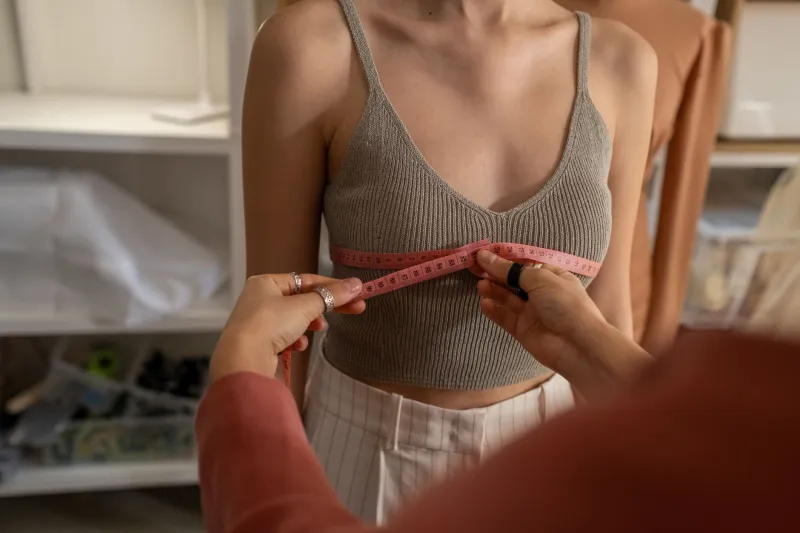
1. Ignoring the measurements. Sizes are labels; measurements are facts. A "large" from one brand can measure smaller than a "medium" from another. Grab a soft tape measure and learn your bust, waist, hip, and — critically — your shoulder width. Shoulder seams are the hardest thing to tailor, so get those right first.
2. Forgetting about height and length. A dress that fits perfectly in the bust might hit mid-calf on you and knee-length on the model. Check garment length measurements (listed in cm on most international sites) and compare against a similar piece you already own.
3. Assuming vanity sizing is global. American brands have spent decades gradually shifting size labels downward — a modern US 8 is cut larger than a 1980s US 8. Many international brands haven't done this, which is partly why they "run small." They're not small; we've been stretched.
4. Skipping the reviews. Online reviews are gold mines. Search for phrases like "runs small," "size up," or "true to size" before committing. If three people say the sleeves are short, believe them.
5. Overlooking return policies. Before ordering from an international retailer, read the fine print on returns. Some overseas sellers charge steep return shipping — factor that into your decision, especially for pieces you're sizing blind.
Know Your Numbers, Shop Anywhere
Here's the smartest shopping hack of the decade: spend one afternoon figuring out your measurements and converting them into the major global systems. Write them down. Keep them in your phone's notes app.
Once you know that your measurements translate to, say, a 42 in Parisian sizing or a 55 in Korean sizing (for men's unisex pieces), you can shop from anywhere in the world with genuine confidence. That K-fashion oversized shirt? You'll know to size down for the intended drape or stay true for the full oversized look. That Italian midi dress? You'll order the 44 without a second thought.
Building a Wardrobe That Flatters, Wherever It's From
A globally-inspired closet doesn't just look worldly — it fits better when you shop it smart. A few principles to live by:
-
Prioritize fit over size label. Nobody sees the tag. A piece that skims your shoulders and hits your waist right will always outperform a "correct size" that doesn't.
-
Embrace the tailor. A $20 alteration can transform an imported piece from almost-right to absolutely-perfect. Hemming a dress or taking in a waist is one of the best investments in fashion.
-
Lean into relaxed silhouettes. Oversized and boxy cuts — beloved in Seoul, Paris, and beyond — are naturally forgiving of size variance. If you're shopping internationally and unsure, a relaxed fit gives you more margin for error than something body-con.
-
Mix, don't match, your sizing logic. Your closet can hold a Korean XL, an Italian 44, and an American small — and they can all be the same size on your body. Release the idea that one number defines you.
The Bottom Line
Shopping globally shouldn't feel like a gamble. With a cheat-sheet in your pocket, your measurements on file, and a healthy skepticism of size labels, you can confidently pull from the best design the world has to offer — Seoul's streetwear energy, Parisian tailoring, Milanese polish — and have it all actually fit.
That's the real global style flex: not just wearing the world, but wearing it well.