Bracket Nation: The Real Price of Ordering Three Sizes and Keeping One

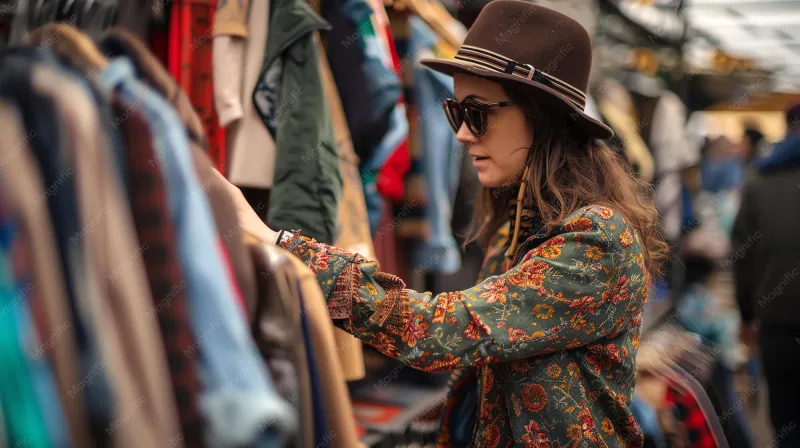
Be honest: when was the last time you ordered just one size of something online? If you're like most American shoppers, the answer is a long time ago. There's even a name for it now — bracketing — the practice of buying the same item in multiple sizes (or colors, or cuts), keeping the one that works, and shipping the rest back. Roughly half of online shoppers admit to doing it, and in fashion, where a size 8 from one brand fits like a 6 from another, it's easy to see why.
Free returns have trained us to treat the dressing room like it's optional. Your closet became the fitting room, the shipping label became your safety net, and returns became a reflex rather than an exception. But that convenience has a tab running — and it's bigger than most of us realize.
How We Got Here
For decades, shopping meant commitment. You tried it on, you bought it, you wore it. Then e-commerce removed the fitting room from the equation, and retailers — desperate to compete with the confidence of walking into a store — made returns free, fast, and frictionless. Print a label, drop the box at your doorstep, done.
The result? Returns ballooned into a multi-hundred-billion-dollar problem for US retailers, with apparel consistently among the most-returned categories. When returns are free, shoppers order three pairs of jeans instead of one. Some of us have done the math out loud: "I'll keep whichever fits." It sounds rational. It is rational. But it's also a system built on the assumption that someone else absorbs the cost.
What Bracketing Actually Costs
Here's the part that doesn't show up on your receipt. A returned item doesn't just teleport back onto a shelf. It has to be shipped (often by air), inspected, re-pressed, repackaged, and restocked — and a meaningful share of returns never make it back to the sales floor at all. Depending on the item and the season, returned goods can end up discounted to near-nothing on liquidation sites or, worse, in landfills. Add up the reverse logistics — the trucks, the packaging, the processing — and the carbon footprint of a return can rival or exceed the original delivery.
And the cost doesn't stay hidden forever. Retailers quietly bake return expenses into prices, which means even the shopper who never returns anything is paying for bracket nation. Some brands have started fighting back: shorter return windows, restocking fees, and "keep it" policies that skip the return shipping entirely because processing the item costs more than it's worth. The free-returns-for-everything era is starting to show cracks.
Why Sizing Chaos Made Us This Way
Let's be fair to the bracketers: American sizing is genuinely inconsistent. A medium at one brand can be a large at the next, and vanity sizing — adjusting numbers downward to flatter shoppers — has made size labels nearly meaningless across borders and even across decades. When the system is this unpredictable, ordering a backup size feels less like wastefulness and more like self-defense.
The good news is that the tools for shopping smarter have gotten dramatically better. Size charts now include actual measurements instead of vague letters. Review sections are full of fellow shoppers reporting "runs small" or "size up." Many retailers offer fit quizzes, model measurements on product pages, and even virtual try-on. A few minutes of research can replace an entire bracketed order.
Smarter Ways to Shop the Fit
You don't have to swear off online shopping to shop more responsibly. A few habits make a huge difference:
-
Measure yourself once, then measure again seasonally. Keep your bust, waist, hip, and inseam numbers in your phone. Compare them to the product's actual measurements, not the letter on the tag.
-
Read reviews like a detective. Search for your size in the review text. If three people your height say the pants run short, believe them.
-
Build a brand-fit map. Once you learn that a certain brand runs generous, note it. Your personal sizing guide is more reliable than any label.
-
Consolidate your orders. If you must bracket, do it in one shipment rather than spreading orders across the week — one return trip beats four.
-
When you do return, do it well. Return items promptly, with tags on and in original packaging. That's the difference between an item getting restocked and an item getting written off.
Keeping the Best Part of Online Shopping
None of this means returns are the enemy. The ability to send something back is genuinely one of the best things about shopping online — it protects you from bait-and-switch photos and shoddy construction. The problem isn't the return itself; it's the reflex. When returns become the plan rather than the backup, the math stops working for everyone, including the planet.
At GLO Shop, we think the sweet spot is simple: shop with the same intention you'd bring to a fitting room. Look at measurements, read what other shoppers say, and order what you actually expect to keep. Your wardrobe — and the UPS driver — will thank you.
Bracketing was a rational response to a broken sizing system. But as sizing tools improve and return policies tighten, the smartest shoppers are discovering something almost old-fashioned: doing a little homework before checkout means more of what you order actually stays. And that's a style win in any size.