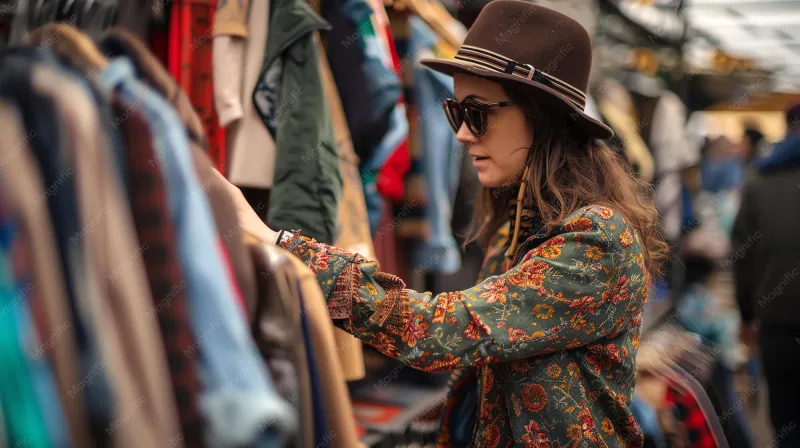
Confessions of a Serial Returner: What Your Open Cart Says About Your Style

Let's be honest: somewhere in your home right now, there's a package that's been sitting by the door for eleven days. It contains a sweater you're 70% sure about. There's a second package too — the same sweater in the other color, because why commit when you can compare them in real life? And somewhere in the back of your mind, a return window is quietly ticking down.
Welcome to the wardrobe of maybe. It's the most crowded closet in America, and almost none of it is hanging up.
The Three-Sizes Strategy
Ordering the same piece in two sizes and returning one has become a normalized shopping ritual — a way of outsourcing the fitting room to your living room. And honestly, there's nothing wrong with it on its own. Sizing is inconsistent, especially when you're shopping internationally or trying a brand for the first time. The problem isn't the practice; it's when it becomes the whole practice.
If every purchase is a trial and every trial ends in a return label, you're not really shopping anymore. You're conducting an endless experiment with no conclusion. And that points to something deeper than fit: it usually means you're not sure what you're actually looking for.
What Your Cart Is Trying to Tell You
There are a few classic shopping personalities, and each one reveals something different about where your style confidence stands.
The Comparison Shopper orders the same dress in three colors, planning to return two. Often, this person is actually shopping for a fantasy version of themselves — the one who wears bold red to brunch. If you always send the bold color back and keep the black, take note. That's not indecision. That's data.
The Window-of-Doom Buyer purchases early, then panics as the return deadline approaches and keeps things out of guilt rather than love. If you're wearing clothes you didn't really want just because you ran out of time to send them back, your closet is filling up with compromise pieces — and compromise pieces are the ones that never leave the hanger.
The Perpetual Re-Orderer returns something, then buys it again a month later, hoping it feels different this time. It rarely does. This loop usually means the item was right for a life you don't quite live yet.
Buying With Intention: A Simple Framework
The fix isn't swearing off returns — returns are a useful safety net. The fix is making fewer decisions that need one. Before you check out, run your pick through three quick questions:
- Can I name where I'll wear it? Not a hypothetical event. A real one, on your actual calendar.
- Can I style it with three things I already own? If it requires a whole new outfit to make sense, it's a project, not a purchase.
- Would I buy it again if I saw it in a store — in person, today? Online, everything looks potential. In person, you know.
If a piece passes all three, buy it with confidence and skip the size-doubling. If it passes two, order it — but make a decision the day it arrives, not on day twenty-nine.
Closing the Loop
The wardrobe of maybe feels harmless because everything is technically reversible. But all those open loops cost you something: mental clutter, closet space, and a slowly eroding sense of what your style actually is. Every time you keep something you're lukewarm on, you blur your own taste a little more.
The most stylish people we know aren't the ones who never return anything. They're the ones who can open their closet and see only yeses. Fewer maybes, stronger point of view — that's the whole game.
So this week, try a small experiment: place one order. Not four. Decide on it within 48 hours of it landing. Then notice how it feels to have a package that goes straight from the doorstep into rotation, no return label required. That feeling? That's what buying with intention looks like — and it never goes out of style.