Twelve Dollars, Full Story: Following One Dress From Factory Floor to Your Front Door
There's a particular thrill in it. You're scrolling at midnight, you spot a dress — the one with the puff sleeves and the little back tie — and the price tag reads $12. You click 'Buy Now' before your brain finishes doing the math. Honestly, we get it. At GLO Shop, we love a deal as much as anyone. But every once in a while, it's worth slowing down and asking what that price actually buys — and what it costs.
The 96-Day Life of a Fast Fashion Dress
Industry analysts estimate that many ultra-cheap garments are worn an average of seven to ten times before being tossed. Some are never worn at all. That works out to roughly a dollar per wear — until you factor in everything else.
The journey starts long before the dress hits a warehouse shelf. Cotton or polyester is grown or produced, spun into fabric, dyed, cut, sewn, packaged, shipped across an ocean, trucked to a fulfillment center, and finally dropped at your door. Each step consumes water, energy, and human labor. A single polyester dress carries a carbon footprint from oil extraction all the way through shipping — and unlike cotton, polyester doesn't biodegrade. It sheds microplastics in the wash and lingers in landfills for centuries.
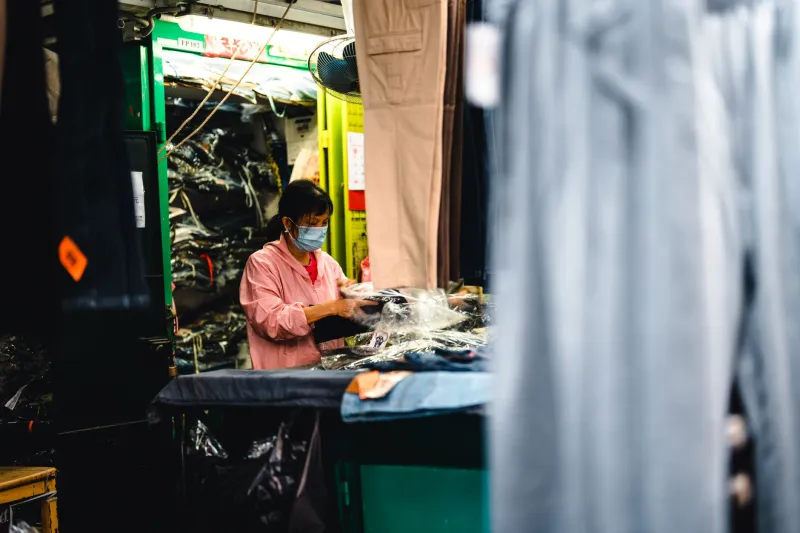
The labor piece is the part most price tags leave out entirely. When a garment sells for less than the cost of a takeout lunch, margins are razor-thin everywhere, and the tightest squeeze tends to land on the people sewing the seams. Garment workers in major production hubs have repeatedly reported wages that fall short of a living wage, long hours, and pressure to hit quotas that keep rock-bottom prices possible.
So Why Is It So Cheap, Anyway?
Ultra-low pricing usually comes down to a combination of four things:
- Materials. Synthetic fabrics like polyester and viscose cost far less than quality cotton, linen, or wool.
- Volume. Producing thousands of units of one design slashes the per-piece cost.
- Speed. Compressing the design-to-shelf timeline from months to weeks means cutting corners somewhere — often in quality control.
- Labor. The lowest prices on the market frequently correlate with the weakest labor protections in the supply chain.
None of this makes you a bad person for shopping on a budget. It just means the sticker price and the true price aren't the same number.
The Landfill Is the Final Destination (Usually)
Here's the uncomfortable stat: the average American tosses roughly 80 pounds of clothing per year, and the vast majority of it ends up in landfills or incinerators rather than donation bins. Cheap construction accelerates the cycle — a dress that pills, stretches, or falls apart after three washes isn't going to a second home. It's going to the trash.
The silver lining? This is the part of the story you have the most control over.
Five Questions to Ask Before You Click 'Buy Now'
You don't need to swear off affordable fashion. You just need a quick mental checklist:
- Will I wear this at least 10 times? The cost-per-wear math is the simplest sustainability tool there is. A $12 dress worn 20 times beats a $90 dress worn twice.
- Does the fabric pass the feel test? Look for natural fibers, heavier weights, and lined seams. If the product photos show pilling or paper-thin material, believe them.
- Do I already own three things like this? (We're not judging. We all have the twelve nearly identical black tees.)
- Is the brand transparent about how it's made? Even a basic sustainability page signals more accountability than nothing.
- Could I find this secondhand first? Some of the best 'new to you' pieces are already out there waiting.
When Cheap Fashion Is Actually Worth It
Let's be real — budget fashion has a legitimate place in a real person's closet. There's nothing wasteful about buying an inexpensive dress for a friend's wedding when your schedule doesn't allow for a $200 splurge. The problem isn't affordability. It's disposability — buying things you don't love, don't wear, and don't keep.
The smarter play is shifting where your dollars go over time. A closet built on a mix of well-chosen affordable staples, a few quality investment pieces, and secondhand finds will outlast a cart full of impulse buys every single time.
The Bottom Line
That $12 dress isn't cheap because someone discovered a loophole. It's cheap because the costs got moved somewhere you can't see them — into a watershed, a factory floor, a landfill. You don't have to fix the entire industry with one purchase. Just click with your eyes open, buy what you'll actually wear, and give the pieces you own a long, well-styled life. That's what conscious style looks like — no perfection required.